UTV radius rods are the rear suspension links that connect your machine’s wheel knuckles to the frame and keep your wheels aligned as the suspension moves. On rough terrain, they take a serious beating. Arizona riders are upgrading them because stock rods bend, fatigue, and hang up on rocks, while high-clearance aftermarket radius rods add strength, ground clearance, and alignment control built for desert and rock-crawling abuse.
If you ride Arizona trails, from the ledges around Sedona to the rock gardens near Box Canyon, your radius rods are among the hardest-working parts on your UTV. This guide explains what they do, why they matter so much here, and why so many side-by-side owners are replacing their factory rods with heavy-duty kits.
What Are UTV Radius Rods?
Radius rods are structural suspension links on the rear of most modern side-by-sides. They connect the rear wheel hubs, or knuckles, to the chassis and control how the wheels track through the suspension travel.
In simple terms, they hold your rear wheels in the correct position. When you set your toe and camber, the radius rods are what keep those settings locked in while you ride.
Most machines run an upper and a lower rod on each side, joined to the frame and knuckle by rod ends. That setup is common across popular platforms like the Polaris RZR Turbo R, RZR Pro R, Can-Am Maverick X3, Kawasaki KRX, and Honda Talon.
Because they manage alignment and carry load at the same time, radius rods live under constant stress. Every rock, rut, jump, and hard corner sends force straight through them.
Why Do Radius Rods Matter So Much on Arizona Trails?
Arizona is one of the most demanding places in the country to ride. You can hit sharp volcanic rock, deep washes, technical ledges, and long high-speed desert runs, sometimes in a single afternoon.
That mix is exactly what exposes weak radius rods.
Stock rods are built to a price and a general-use standard. They are not designed for repeated aggressive riding. On Arizona terrain, a few problems tend to show up fast:
- Bent rods from rock strikes and hard landings
- Rear steer, where bent or flexing rods let the back wheels wander
- Lost ground clearance, so the rods catch on ledges and rocks
- Fatigue cracks that eventually turn into trail breakdowns
Once a rod bends even slightly, the metal fatigues, and failure often follows. Rear steer is one of the sneakier problems, because a rod that has flexed lets your rear wheels change position on their own. That creates loose, unpredictable handling and puts stress on everything connected to the suspension.
A breakdown miles from the trailhead is more than an inconvenience in the Arizona heat. It is a safety issue. That is why upgrading radius rods is one of the most common early UTV upgrades for Arizona trails.
Why Arizona Riders Are Upgrading to High-Clearance Radius Rods
Upgrading is not about chasing trends. It is about matching your equipment to the terrain you actually ride. Here is what high-clearance radius rods for rocky trails deliver.
More Ground Clearance Where It Counts
High-clearance radius rods are shaped to sit higher and clear obstacles the stock rods would drag across. On ledges, rocks, and technical lines, that extra clearance helps your machine glide over terrain instead of hanging up.
For rock crawling around areas like Box Canyon or Table Mesa, that difference is felt on almost every obstacle.
Strength That Handles Desert Abuse
Heavy-duty radius rod kits are engineered to resist the compression, tension, and side loads that bend factory parts. Instead of flexing under aggressive riding, they hold their shape, which protects your alignment and the rest of your suspension.
Our Flex Rock radius rods are built specifically to solve the failure points that plague stock rods, so you spend less time replacing bent parts every season.
Adjustability and Alignment Control
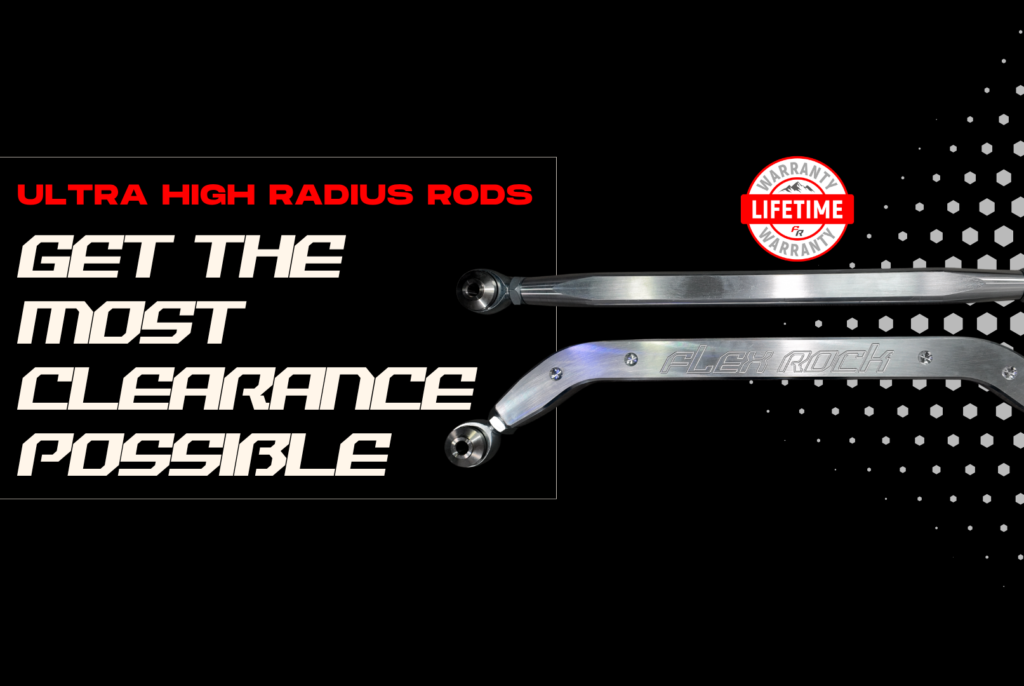
Quality aftermarket radius rods give you real alignment control. Flex Rock Ultra High Clearance rods are fully adjustable top and bottom using service-free PTFE-lined three-piece rod ends, with anti-rotation misalignment spacers included.
That means you can dial in your toe and camber precisely, then trust those settings to stay put when the trail gets rough.
Materials Built for the Job
Material choice matters. Flex Rock Ultra High Clearance radius rods are made from billet aerospace-grade T6 6061 aluminum. Billet aluminum radius rods for UTVs combine strength with lighter weight, and they resist the corrosion and wear that come with dusty, wet, and abrasive riding.
For riders who prefer a proven, cost-effective option, we also offer chromoly steel, so you can match the build to your riding style.
What Influences the Cost of a Radius Rod Upgrade?
Radius rod pricing varies based on a few clear factors. Knowing them helps you compare aftermarket radius rods fairly instead of shopping on price alone.
- Vehicle platform. A Polaris RZR Pro R kit is not the same as a KRX kit, and fitment-specific engineering affects cost.
- Front, rear, or full set. Rear kits are the most common upgrade, though some riders add front components too.
- Material. Billet aluminum and chromoly steel carry different price points and benefits.
- Rod end quality. Service-free, three-piece adjustable rod ends cost more than basic units, and they hold up longer.
- Warranty and manufacturing. Made-in-USA parts backed by a lifetime warranty on non-wear items reflect tighter quality control.
The goal is long-term value. A rod kit that survives seasons of hard use is cheaper than replacing bent stock rods again and again.
How to Choose the Right Radius Rods for Your UTV
Start with fitment. Confirm the kit is designed for your exact make, model, and year, whether that is a Polaris RZR, Can-Am Maverick X3, Kawasaki KRX, or Honda Talon. Polaris RZR radius rods in Arizona are a frequent request simply because the platform is so popular on local trails.
Next, match the build to your terrain. If you ride Arizona rocks and ledges, high clearance and strength should be your priorities. If you run fast, open desert, load resistance, and alignment stability matter most.
Then look at the details that separate quality kits: adjustable rod ends, strong materials, misalignment spacers, and a real warranty. Finally, buy from a manufacturer that is transparent about materials and stands behind the product.
Key Takeaways
- UTV radius rods are rear suspension links that keep your wheels aligned and carry heavy load on the trail.
- Stock rods bend, fatigue, and hang up on rocks, which leads to rear steer and trail breakdowns.
- Arizona’s rocky and desert terrain makes strong, high-clearance radius rods a smart early upgrade.
- Flex Rock Ultra High Clearance rods use billet aerospace-grade T6 6061 aluminum, are fully adjustable top and bottom, and carry a lifetime warranty on non-wear items.
- Choose rods by confirming fitment, matching materials to your terrain, and buying from a transparent, made-in-USA manufacturer.
Ready to Upgrade Your Radius Rods?
If you are tired of replacing bent rods every season, stronger radius rods are one of the best upgrades you can make for Arizona riding. FlexRockPerformance designs and manufactures high-clearance, made-in-USA radius rods built to handle rock crawling, desert runs, and technical trails.
Explore our rear high-clearance radius rod kits to find the right fit for your machine.
Have questions about fitment or which kit suits your riding style? Call us at (317) 427-0010 to request a consultation, and we will help you build a machine you can trust when the terrain gets rough.
Frequently Asked Questions
Stock radius rods are usually stamped or tubular steel. Aftermarket options are typically billet aluminum or chromoly steel. Flex Rock Ultra High Clearance rods use billet aerospace-grade T6 6061 aluminum for a strong, lighter-weight build.
If you ride rocky, technical terrain, high-clearance rods make a real difference. They lift the rod profile so it clears obstacles that stock rods drag on, which is especially useful on Arizona’s rock ledges and desert washes.
Flex Rock builds radius rods and suspension components for popular platforms including Polaris RZR, Polaris GENERAL, Can-Am, Kawasaki KRX, and Honda Talon. Always confirm the specific kit matches your model and year before ordering.
Common signs include loose or wandering rear handling, uneven tire wear, a clunking noise over bumps, or visible bending after a hard hit. If your alignment will not hold, bent rods are a likely cause.
For riders who push their machines, yes. Aftermarket radius rods reduce breakage, hold alignment, and add clearance. Over time, they often cost less than repeatedly replacing bent stock rods.
Rear radius rods take the most abuse on most machines and are the most common first upgrade. Riders who run very aggressive terrain sometimes add front components as well.
Neither is simply better. Billet aluminum offers strength with less weight and strong corrosion resistance. Chromoly steel is proven and cost-effective. The right choice depends on your riding style and budget.
Help our content reach more riders and add us as a preferred source on Google!